
A 4-Million-Bpd Shadow Oil Highway Is Running Through Hormuz
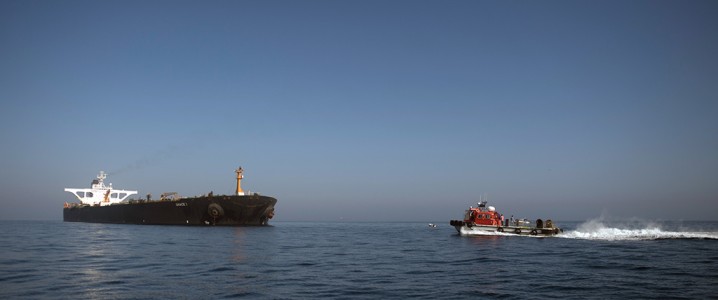
U.S. Treasury Secretary Scott Bessent has predicted that the Strait of Hormuz will become “irrelevant” within two years, and with Gulf oil producers already building their way around it, millions of barrels may prove him right for a short time. Months into the Iran war, the UAE, Iraq, Kuwait and Qatar are moving more than 4 million barrels per day through a shadow export network of AIS-dark shuttle tankers and ship-to-ship transfers outside the Persian Gulf, keeping millions of barrels flowing through a waterway that has largely closed to normal commercial traffic.
The operation has grown into one of the biggest workarounds of the six-month war. Around 150 vessels are now gathered off Oman, up from roughly 40 in January, with tankers making repeated runs through Hormuz with their transponders switched off before transferring their cargoes to larger vessels waiting outside the strait, according to Bloomberg.
Saudi Arabia is preparing another layer: state shipping company Bahri has positioned 16 VLCCs off Oman, with three more reportedly on the way, giving the fleet capacity to carry roughly 38 million barrels as renewed Houthi attacks threaten the kingdom’s existing escape route through the East-West Pipeline and Red Sea.
The shadow network began taking shape in early May, when the U.S. military started overseeing ship-to-ship transfers off Fujairah in the UAE and Sohar in Oman. Tankers carrying Gulf crude make the run through Hormuz with their transponders and lights switched off, then pull alongside larger vessels waiting outside the strait to transfer their cargo. The shuttle tankers then return to the Persian Gulf for another load. Reuters identified at least 116 vessels involved in the operation by mid-June, with satellite imagery showing as many as 17 simultaneous transfers at the two sites.
Nearly 20 million bpd of crude and refined products moved through the strait before the war, leading market observers to fear triple-digit oil prices if Iran succeeded in shutting it down. But instead, pipelines, emergency stockpiles and the rapidly expanding “tanker shuttle” have kept enough Gulf supply in play to a catastrophic shortage.
Saudi Arabia entered the war with an advantage over its Gulf neighbors. The 5-million-bpd East-West Pipeline carries crude from fields in the east across the kingdom to Yanbu, allowing Aramco to export from the Red Sea without using Hormuz. Riyadh has pushed more oil through the system during the war, but the alternative has developed its own problem in the Red Sea, courtesy of Iran’s move to awaken the Houthis. Tankers leaving Yanbu still have to navigate the Red Sea and Bab el-Mandeb, where Houthi attacks, on Iran’s orders, turn this into another Hormuz situation, as it has been before.
On Monday, Reuters reported that Saudi Arabia had also started privately offering Asian refiners Arab Medium and Arab Heavy crude through ship-to-ship transfers off Fujairah, with September cargoes under discussion. The would spare buyers from sending their own tankers through Hormuz for Saudi crude. Aramco has also offered Arab Light from Egypt’s Sidi Kerir terminal after Houthi attacks complicated exports from Yanbu.
All this remaining the same, then, Bessent’s prediction could be realized; but all things rarely remain the same, and there are other chokepoints, too.
The UAE has its own 1.5-million-barrel-per-day pipeline from Abu Dhabi to Fujairah on the Gulf of Oman, while most Iraqi, Kuwaiti and Qatari exports remain heavily dependent on Hormuz. Building enough pipeline capacity to reroute 50% to 70% of the energy currently crossing the strait would require new infrastructure across several countries, while solving the problem of where those pipelines ultimately deliver their cargo.
Africa isn’t immune, either. Ships diverted from Hormuz and the Red Sea are increasingly being pushed onto the much longer route around the Cape of Good Hope, adding thousands of miles to the mix and tempting a resurgence of Somali piracy.
While sending more high-value cargo through waters where Somali piracy is making a comeback. More commercial vessels are being dispersed across the western Indian Ocean and around Africa, while the U.S. and allied naval resources that significantly suppressed Somali piracy after its 2011 peak have been diverted to the Gulf, leaving these waters underprotected.
The cost of keeping Gulf oil moving seems to rise with each new workaround. Reuters reported on August 12 that many VLCCs are now avoiding Bab el-Mandeb altogether, forcing Saudi barrels north through the Red Sea and Suez or onto much longer voyages around Africa.
This post appeared first on https://oilprice.com